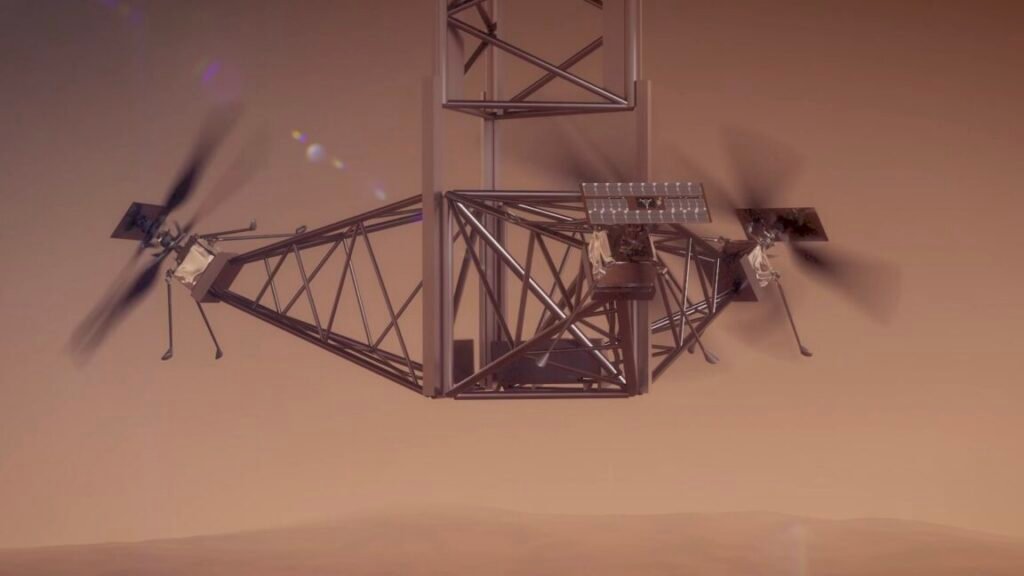
NASA engineers just figured out how to build helicopter blades that won’t fall apart when spinning at supersonic speeds. The breakthrough happened at NASA’s Jet Propulsion Lab, where testing proved the new rotor technology can handle extreme conditions without disintegrating.
This might sound like a small engineering win, but it’s actually huge for aircraft design. Regular helicopter blades have speed limits because they literally tear themselves apart when spinning too fast. NASA’s new design breaks through that barrier.
Beyond Earth’s Atmosphere
The timing isn’t coincidental. NASA has been working on flying vehicles for Mars missions, where the thin atmosphere makes everything harder. The famous Mars helicopter Ingenuity proved flying on other planets is possible, but it was limited by traditional rotor constraints.
These supersonic-capable blades could power much larger aircraft on Mars or other worlds. They might also revolutionize helicopters here on Earth, making them faster and more capable than ever before.
The engineering challenge was immense. When rotor blades spin fast enough, the tips break the sound barrier and create forces that destroy most materials. NASA’s team had to rethink blade design from scratch, considering everything from materials to aerodynamics.
What’s Next
NASA hasn’t announced specific missions using this technology yet, but the implications are clear. Future Mars helicopters could be bigger and more powerful. Earth-based aircraft might get major upgrades too. The next step is moving from lab testing to real-world applications, which could take several years but promises to change how we think about rotorcraft entirely.