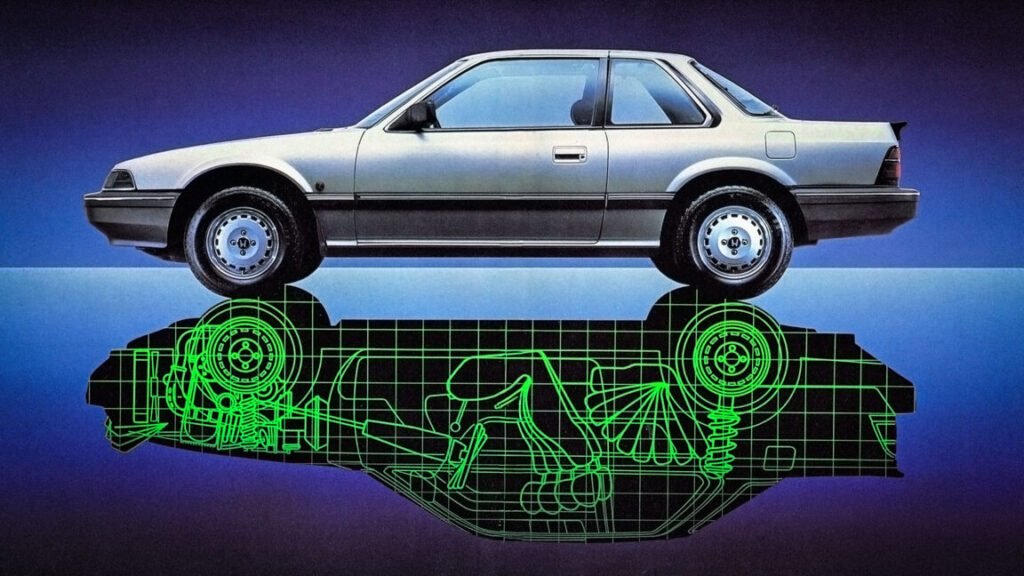
Honda used its stylish Prelude sports car as a hidden laboratory to test cutting-edge automotive technology before putting it in regular cars. Features that seem normal today, like four-wheel steering and variable valve timing, first appeared in this two-door coupe.
The Prelude looked like a fun weekend car, but it was actually Honda’s engineering playground. While other carmakers played it safe, Honda packed experimental tech into a car that people actually wanted to buy.
The Perfect Cover Story
Sports car buyers were willing to pay extra for performance features and forgive quirks that regular car shoppers wouldn’t tolerate. This made the Prelude the ideal testing platform. Honda could see how new technology performed in real-world driving without risking their reputation on mainstream models like the Accord.
Four-wheel steering, which turns the rear wheels slightly to help with tight corners, debuted in the Prelude years before appearing in luxury cars. Variable valve timing, now standard across the industry, also got its start here. Even Honda’s advanced suspension systems were tested on Prelude owners first.
The strategy worked brilliantly. By the time Honda added these features to their popular family cars, they had already worked out the bugs and proven the technology with enthusiastic drivers who provided real feedback.
What Happened Next
Honda discontinued the Prelude in 2001, but its legacy lives on in every modern Honda. Many features we take for granted in today’s cars were battle-tested by Prelude drivers decades ago. The car proved that innovation doesn’t always need a laboratory – sometimes it just needs willing customers.