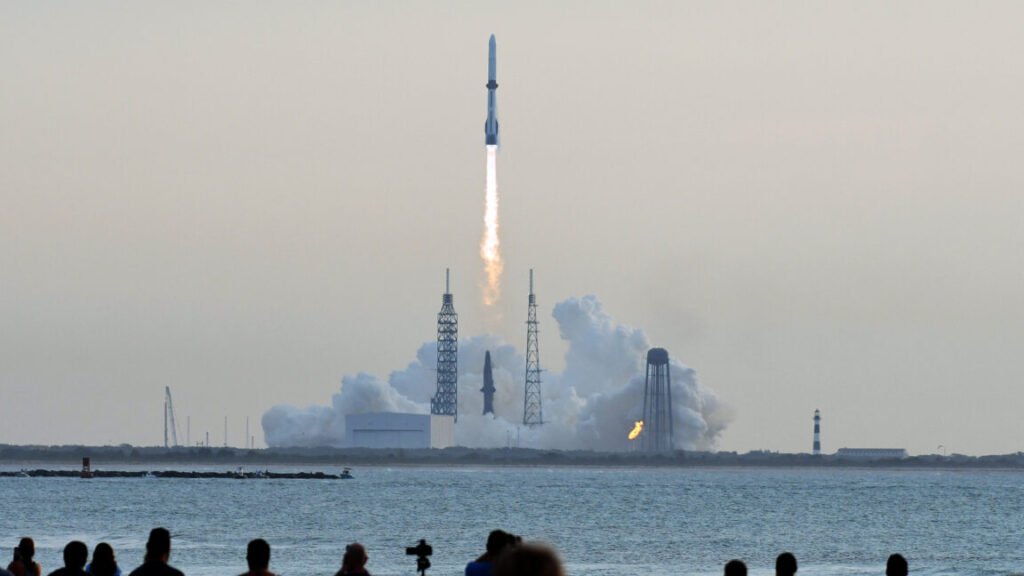
Blue Origin’s massive New Glenn rocket had a mixed first day, successfully reusing its booster but losing its upper stage during the test flight. The company managed to land the rocket’s first stage back on a ship, but the upper stage that carries satellites into space failed to complete its mission.
This was a huge moment for Jeff Bezos’ space company, which has been trying to compete with SpaceX for years. Getting the landing right is incredibly expensive and technically challenging – most rockets just crash into the ocean after one use.
Half Victory, Half Setback
Blue Origin nailed the hardest part by catching their booster, which is the massive bottom section that provides most of the rocket’s power. Landing this piece safely means they can use it again, potentially saving millions per launch. But the upper stage, which separates from the booster and actually delivers payloads to orbit, didn’t make it.
The failure highlights how difficult rocket launches remain, even for well-funded companies. SpaceX took years to perfect their system and had plenty of spectacular failures along the way. For Blue Origin, this test proves their landing technology works but shows they still have work to do on the orbital delivery system.
The company will likely spend months analyzing what went wrong with the upper stage before attempting another launch. Success in the reusable rocket business requires getting both stages working perfectly together.